


Chronic Enteropathy in Dogs and Cats: Beyond the Old IBD Diagnosis

An updated nutritional approach with fiber, hydrolyzed fish proteins, selected ingredients and microbiome support for chronic intestinal inflammation.
For many years, veterinarians and pet owners used the term IBD, Inflammatory Bowel Disease, to describe dogs and cats with chronic vomiting, diarrhea, weight loss and intestinal inflammation. Today, especially in dogs, veterinary medicine has moved toward a more accurate term: chronic enteropathy, and more specifically chronic inflammatory enteropathy, CIE, when chronic gastrointestinal signs persist or recur after other causes have been excluded. The most recent ACVIM-endorsed guidelines recommend avoiding the generic use of “IBD” in dogs, because the human disease called IBD is similar in some aspects but not identical to canine chronic intestinal inflammation.

This change is not just a matter of terminology. It changes the way we diagnose, classify and manage these patients. Chronic enteropathy is not one single disease. It is a spectrum of gastrointestinal disorders involving diet, intestinal microbiota, mucosal barrier function, immune response, genetics and environmental factors.
What Clinical Signs Can Suggest Chronic Enteropathy?
In dogs and cats, chronic enteropathy may cause:
Persistent or recurrent diarrhea
Vomiting
Weight loss
Reduced appetite or appetite changes
Mucus or blood in the stool
Flatulence
Abdominal discomfort
Poor coat quality
Loss of muscle condition
In more severe cases, low albumin, edema, ascites or signs of protein-losing enteropathy, also called PLE
These signs are not specific. Parasites, Giardia, chronic pancreatitis, exocrine pancreatic insufficiency, liver disease, kidney disease, hypoadrenocorticism, infections, intestinal foreign bodies, lymphangiectasia and intestinal cancer can all mimic chronic enteropathy. This is why CIE remains a diagnosis of exclusion, supported by a structured diagnostic pathway and by the response to well-designed treatment trials, especially dietary trials.
From “IBD” to a More Modern Classification
Today, chronic enteropathy is often classified according to treatment response:
Food-Responsive Enteropathy, FRE
This is a form of chronic enteropathy that improves with a strict nutritional trial.
Immunosuppressant-Responsive Enteropathy, IRE
This form requires immunomodulatory treatment after appropriate diagnostic evaluation.
Non-Responsive Enteropathy, NRE
This describes more complex cases with incomplete or absent response to standard treatment.
Specific Phenotypes
Some patients present with particular forms such as protein-losing enteropathy, intestinal lymphangiectasia or granulomatous colitis. These require a more tailored diagnostic and nutritional approach.
The older concept of “antibiotic-responsive enteropathy” is now being reconsidered. Current guidance discourages routine empirical antibiotic use in suspected canine CIE, because responses may be temporary, relapses are common and long-term effects on the microbiome can be detrimental.
Why Diet Is Often the First Step in Chronic Enteropathy in Dogs
In clinically stable dogs, especially those that are not anorexic and do not show severe systemic illness, a strict dietary trial is now considered a first-choice diagnostic and therapeutic step. ACVIM guidance reports that many dogs with CIE are food-responsive and may maintain clinical remission with dietary management alone.
A proper dietary trial must be exclusive. This means no treats, table food, flavored supplements, dental chews or unplanned additions. Even small extras can interfere with the interpretation of the response.
Clinical response should be monitored through:
Stool consistency
Stool frequency
Vomiting episodes
Appetite
Body weight
Body condition and muscle condition
Clinical scoring systems such as CIBDAI or CCECAI, when appropriate
Clinical improvement is often seen within the first 10 to 14 days, but some cases require longer monitoring and repeated dietary trials with different nutritional strategies.
Hydrolyzed Proteins, Fiber and Selected Ingredients
Diets based on hydrolyzed proteins or carefully selected ingredients can be useful because they may reduce antigenic stimulation and improve digestibility. A randomized controlled trial in dogs with chronic enteropathy showed that hydrolyzed fish diets supported clinical remission in non-protein-losing chronic enteropathy and supported recovery in dogs with protein-losing enteropathy, although each case must still be evaluated individually.
Fiber should also be selected according to the patient’s clinical presentation. Soluble fibers may support the production of short-chain fatty acids and help nourish beneficial bacteria, while insoluble fibers can help regulate intestinal transit and improve stool consistency, especially in large-bowel disorders. ACVIM guidelines include fiber-enriched diets among possible therapeutic diet options, depending on diet history, clinical signs and diagnostic findings.
The Role of the Intestinal Microbiome
Recent research has shown that the intestinal microbiome is not just a passive observer. Dogs with chronic inflammatory enteropathy often show changes in bacterial diversity, microbial composition, bile acid metabolism and short-chain fatty acid production.
For this reason, the modern goal is not to “sterilize” the intestine with repeated antibiotic courses. The goal is to support a more balanced intestinal ecosystem through:
Appropriate diet
Selected fiber sources
Prebiotics
Evidence-based probiotics
Nutritional modulation of the microbiome
In selected cases, more advanced microbiome-directed strategies
However, not all probiotics or microbiome-supporting ingredients have the same level of clinical evidence. They should be selected according to the patient, the diagnosis and the veterinarian’s assessment.
Ascophyllum nodosum: A Supportive Ingredient, Not a Stand-Alone Treatment
Ascophyllum nodosum is a brown seaweed that contains bioactive compounds such as alginates, fucoidans, laminarans and polyphenols. These compounds have been studied for potential effects on gut health, microbial fermentation and inflammation.
In a pilot study on dogs with chronic inflammatory enteropathy, Ascophyllum nodosum, alone or combined with Bacillus subtilis C-3102, did not significantly improve clinical activity scores. However, it showed potentially positive effects on fecal fermentation and some beneficial bacterial groups.
For this reason, Ascophyllum nodosum should be described correctly: it may be a supportive nutritional ingredient, especially within a complete intestinal diet, but it should not be presented as a proven anti-inflammatory cure or as a replacement for diagnosis, monitoring or medical treatment when needed.
High-Fiber Intestinal Diets and Colon Support
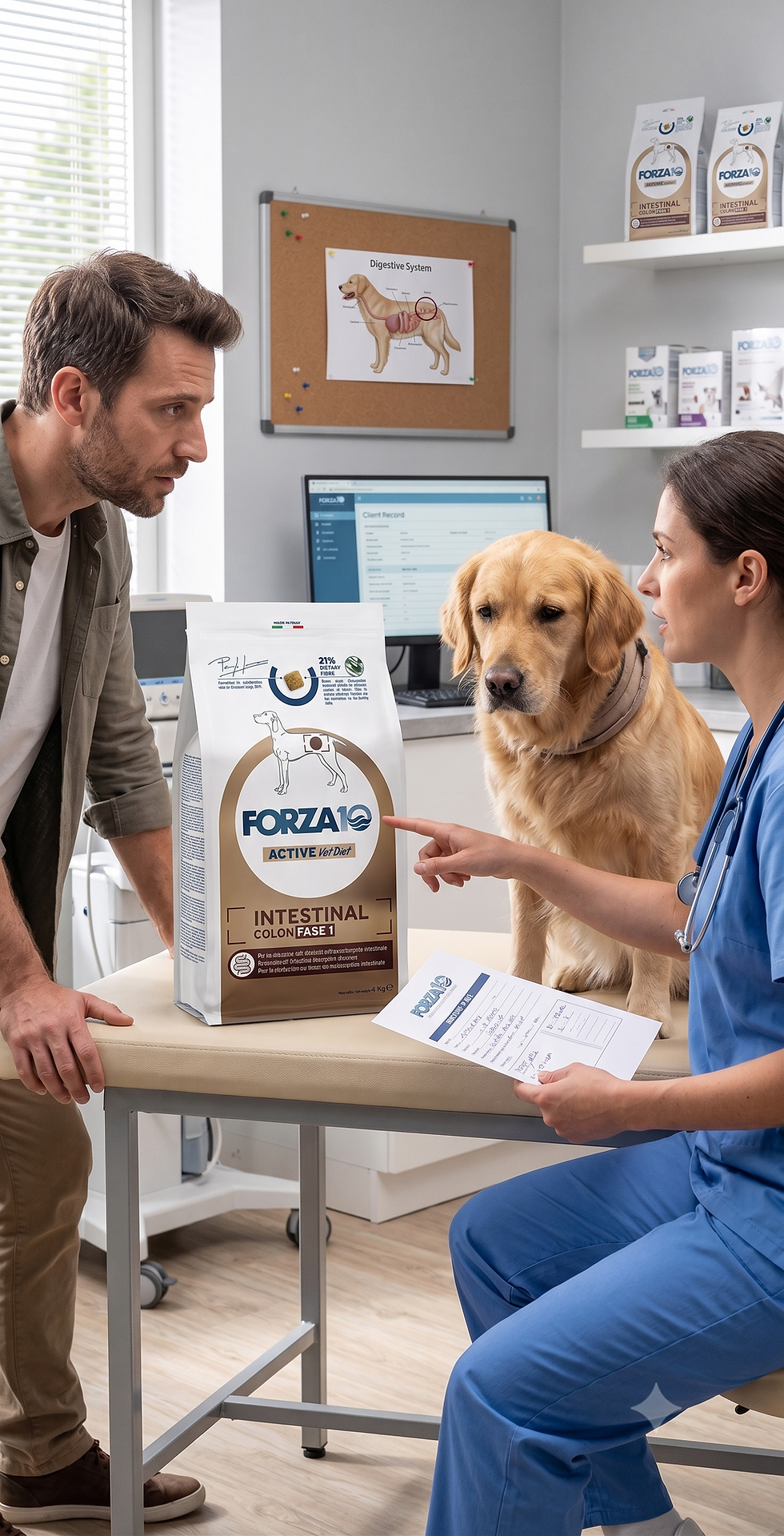
In dogs with fiber-responsive intestinal disorders or clinical signs mainly involving the large bowel, a high-fiber intestinal diet may be considered as part of a structured nutritional plan. Diets such as Intestinal Colon Phase 1, formulated with hydrolyzed fish proteins and Ascophyllum nodosum, or alternatives based on selected ingredients such as lamb and sorghum, may be useful when their nutritional profile matches the patient’s clinical needs, diet history and individual tolerance.
Wet food, dry food or controlled mixed feeding may improve palatability, hydration and owner compliance. However, during a diagnostic dietary trial, consistency is essential. Every food given to the patient must be part of the plan, otherwise the clinical response may become difficult to interpret.
What About Cats?
In cats, chronic enteropathy requires even greater caution. Feline chronic enteropathies include food-responsive disease, inflammatory enteropathy and low-grade intestinal T-cell lymphoma. These conditions may overlap in clinical signs, bloodwork, ultrasound findings and even some histological features.
For cats with chronic vomiting, diarrhea, weight loss or appetite changes, an accurate diagnostic pathway is essential. In selected cases, biopsy, immunohistochemistry and clonality testing may be necessary to distinguish chronic inflammation from low-grade intestinal lymphoma, because treatment, prognosis and follow-up can be very different.
When Are Further Tests Needed?
A dietary trial is often appropriate in stable patients, but it should not delay further investigation in severe or complicated cases.
Further diagnostic work-up is recommended when the patient has:
Marked weight loss
Low albumin
Persistent anorexia
Anemia
Ascites or edema
Severe or persistent blood in the stool
Significant ultrasound abnormalities
Poor response to well-conducted dietary trials
Recommended investigations may include CBC, serum biochemistry, electrolytes, fecal examination, Giardia testing, cobalamin, folate, TLI, pancreatic lipase, basal cortisol or ACTH stimulation test, abdominal ultrasound, endoscopy and biopsy. Histopathology should be interpreted together with clinical findings, diet response and exclusion of other diseases, because inflammation on biopsy alone does not always define the disease or predict prognosis.
Conclusion
Using the term “IBD” alone is no longer enough. In dogs, the more accurate and updated concept is chronic inflammatory enteropathy, a complex condition involving diet, microbiome, intestinal barrier function and immune regulation.
In stable patients, the first step is often a strict dietary trial with highly digestible ingredients, hydrolyzed proteins or selected protein sources, appropriate fiber and targeted microbiome support. High-fiber intestinal diets, hydrolyzed fish proteins and ingredients such as Ascophyllum nodosum may be valuable tools within an individualized nutritional strategy, but they should not be considered a universal cure.
Every dog and cat with chronic gastrointestinal signs should be evaluated by a veterinarian, because the response to diet is part of the diagnosis, and some patients need advanced investigations or medical treatment.


Commenti